When I started investing in real estate, I thought it was all numbers: spreadsheets and proformas.
I don't think I was wrong to care about the math. A building has to work, or it does not last, and everyone in it feels that. What I was missing was the other half of the work.
Catherine Reines showed a full room that it is people and numbers, and the best projects show up for both.
The panelist I keep thinking about
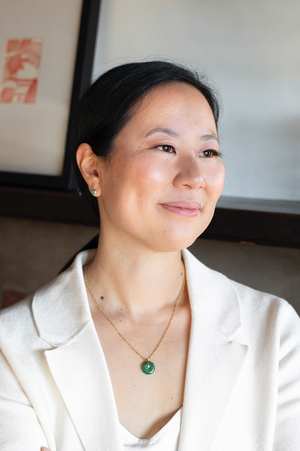
Cathy is founder and CEO of Kōz Development. At IMN's Middle-Market Multifamily PNW, she was the panelist I keep thinking about.
That is a high bar, because a conference room can give you a lot of slides and not much that stays with you. This one stayed with me because she did not treat "people" as a soft ending to a financial presentation. She put both in the same frame and let the room see that they belong together.
It is tempting to live in only one of those columns. The spreadsheet is cleaner. The resident request is messier. Cathy's point, as I heard it, was that the best work does not wait to choose.
First, the numbers
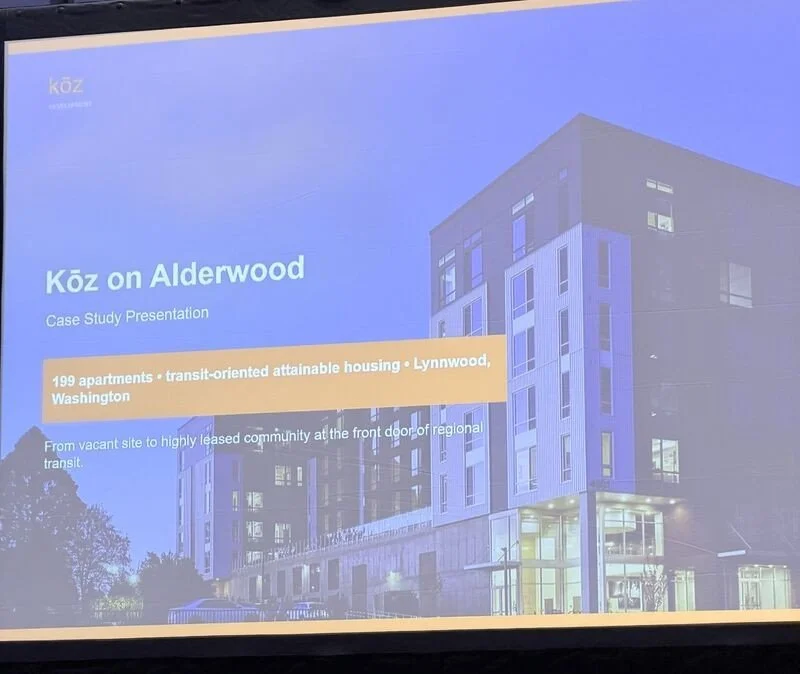
So, for the numbers: Kōz Alderwood opened in March with 199 units and was already at 95% occupancy.
That is a strong result, and it is the kind of result a room of investors will remember. A building that fills like that tells you the product, the location, and the operations are doing their job. I don't need to dress that up. The numbers were already doing the talking.
I also don't think the occupancy is the whole story. It is the proof that a people-centered approach can still perform. Without that proof, the rest of the conversation would have sounded like a hope. With it, the room had to take the operations seriously.
Then, the people
Kōz builds for workforce residents, so her team asked one of their communities a simple question: What do you need?
Year one, residents asked for financial education. Year two, they asked how to start a small business.
That is what housing security buys. Not just a roof, but room to stabilize, plan, learn, save, and dream.
I loved the simplicity of the question. Not a long survey. Not an assumption about what people should want. A direct ask, and then a response that changed as the community changed. The first year was about getting steadier. The second year was about building something. That progression only happens if people feel secure enough to think past next month's rent.
It matters most for people around 60% of area median income, who earn too much for assistance and not enough to feel secure in this market: workforce residents, seniors, and now families.
I hear that squeeze often, even if I am usually on the owner side of the table. People who work, who keep a city running, and who still cannot get to a place that feels stable. A building that makes room for them is doing more than leasing units. It is giving them enough security to plan.
The lesson travels, even at a different scale
I'm a mom-and-pop investor. Cathy operates at a scale I don't.
That difference is real, and I don't want to blur it. I am not going to pretend a small portfolio and a 199-unit community are the same job. The systems are different. The teams are different. The capital is different.
But the lesson travels: resident-centered operations and strong returns are not a tradeoff. You can build for both.
That is the sentence I carried out of the room. It is also the sentence I wish I had understood earlier in my own investing, when I was more likely to treat the numbers as the whole job. Some of that early education was expensive, which I wrote about in Mistakes I Made as a Seattle Landlord, and What Changed. The work gets better when you hold both sides at once.
I am grateful for leaders like Cathy who show us what attainable housing can actually deliver for its tenants and its investors. I needed that reminder, and I think a lot of landlords and property managers need it too.
If you want more of how I came to this work, you can Read My Story. I also host conversations about housing and owning on PadSplit webinars and conversations I host, share them on My YouTube Channel, and write more for owners on My Blog.
The best projects, at least the ones I keep thinking about, do not ask you to choose between a strong return and a community that can actually grow. They show up for both.
FAQ
What stayed with you from Catherine Reines's panel?
That the best projects show up for people and numbers, not just one or the other. Kōz Alderwood opened in March with 199 units and was already at 95% occupancy, and her team also asked residents what they needed: financial education in year one, and help starting a small business in year two.
Who is this kind of housing for?
Kōz builds for workforce residents. The point I took from the panel is that housing security matters most for people around 60% of area median income, who earn too much for assistance and not enough to feel secure in this market, including workforce residents, seniors, and families.
Let's talk
If you want to talk about a property, or about building for both people and numbers, Book a Call. You can also email me at suzanne.vetillart@padsplit.com.