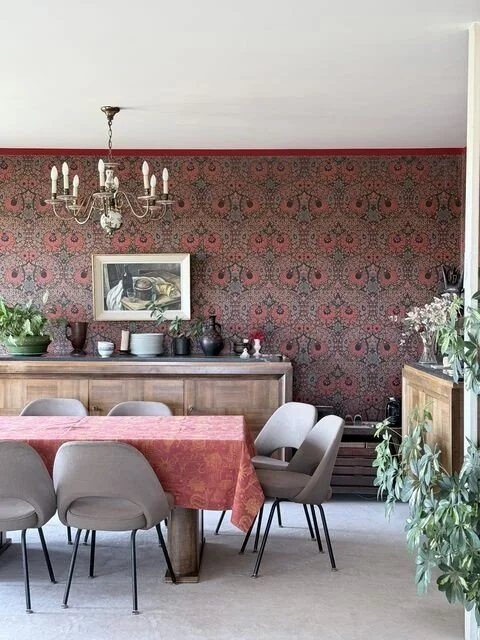
I recently stayed in a family apartment just outside of Paris, in Saint-Cloud. The apartment belongs to "Bonne Maman."
She's owned the same apartment for 50 years. She raised her family there. She still lives there today at age 99, with one person who comes to clean and check on her daily.
That already would have stayed with me. But here's the part that stays with me even more.
Housing as an intentional connector
Inside that same building, she owned two studios. Over the years, they became rentals for her children and numerous grandchildren, one after another, as each came through Paris for school or work.
I spoke with one of them. He lived there five years while studying and working in the city. His studio had no kitchen, so most nights he ate dinner upstairs with his grandparents.
That wasn't a hardship. That was the design.
I keep coming back to that sentence, because it is so different from the way a lot of us are taught to think about housing. A missing kitchen could look like a flaw. In this family, it was a reason to keep showing up for dinner. The building itself made connection the easy choice, not an extra effort.
Bonne Maman built housing as an intentional connector. A room for a grandchild. A reason for family to keep passing through.
Today she is still active, open, and surrounded, and I don't think that's an accident. Her central location and her spare rooms are why family is always in town, always stopping by.
The American habit of more private space
Now think about the American model. We optimize for owning our own private space. An abundance of rooms. So much square footage per person that keeps climbing while the people inside get lonelier.
I have seen how easy it is to treat a house as a set of private rooms first, and a place of connection second. We add space. We do not always add reasons for people to keep crossing each other's paths.
Bonne Maman built the opposite, and she did it without ever calling it a strategy.
Why this matters for housing right now
The silver tsunami is coming. When I first wrote about this stay, King County was already home to more than 300,000 residents over 65, and that number climbs every year.
When I casually talk to baby boomers, almost none of them picture themselves in a large nursing home with that chlorine smell.
What they describe is a single-family home, maybe their home converted, that can hold a caretaker, roommates, or visiting family. Something closer to what Bonne Maman built by instinct.
People want to stay in a place that still feels like home. They want company, and help close by, without giving up the life they already built.
And here's the reframe most homeowners and boomers haven't considered. Opening up a spare room isn't just about connection. It's a way to cut your own expenses while widening your world instead of shrinking it. You lower your costs, and you trade isolation for company. Bonne Maman did both without ever calling it a strategy.
Co-living has to be part of the answer
If aging in place is going to be real for more than the wealthy, co-living and converted single-family homes have to be part of the answer.
I later sat down with Charles Rossano to dig into exactly this: the coming housing gap for seniors, what it could mean for housing operators and investors, and how rent-by-room might fit a more intentional strategy. That conversation is on PadSplit webinars and conversations I host, and you can also find it on My YouTube Channel.
I don't tell the Saint-Cloud story because every family should copy a Paris apartment. I tell it because it made a housing idea feel concrete: a spare room, a reason to come to dinner, and a 99-year-old woman still in the home where she raised her family, surrounded instead of isolated.
If you want more of how I came to this work, you can Read My Story. I also write about rent-by-room and the owners I meet on My Blog, and you are welcome to Get in Touch if this is something you are weighing in your own home or portfolio.
The lesson I carried home was simple: housing can isolate people, or it can keep them connected, and sometimes the difference is a spare room used on purpose.
FAQ
What did the Paris apartment teach you about spare rooms?
Bonne Maman has lived in the same apartment for 50 years and still lives there at 99. In the same building she owned two studios that family members used as they came through Paris for school or work. One grandson lived there five years, and because his studio had no kitchen, he ate dinner upstairs most nights. The spare rooms kept family close.
Is this only about family, or does it matter for aging in place more broadly?
Both. When I talk with baby boomers, almost no one pictures a large nursing home. What they describe is a home that can hold a caretaker, roommates, or visiting family. Opening a spare room can lower costs and trade isolation for company, which is why I think co-living and converted single-family homes have to be part of aging in place.
Let's talk
If you are thinking about a spare room, a conversion, or how this might work in the Seattle area, Book a Call. You can also email me at suzanne.vetillart@padsplit.com.